
AI in the Connected Home: Why Residential Technology Is Becoming More Responsive
The smart home industry has spent years talking about automation.
Lights that turn on at set times. Heating that follows a schedule. Blinds that close at sunset. Audio, video and security systems that respond to programmed commands.
But AI is changing the the direction of coversations.
Connected homes are moving beyond fixed routines and entering a more intelligent era. One where systems can learn behaviour, anticipate preferences, and adapt in real time.
For residential technology professionals, that shift is significant. Because the future of the smart home will not be defined by how many devices are connected. It will be defined by how well those devices work together.
From connected to responsive
A connected home can be controlled. A responsive home can understand context.
Big difference.
AI has the potential to make residential environments more intuitive, efficient, and personal. Lighting can adjust based on occupancy, time of day, and mood. Climate systems can learn how different rooms are used. Security platforms can identify unusual activity rather than simply detect movement. Entertainment systems can personalise audio and video settings automatically.
In luxury residential settings, these expectations are likely to grow quickly.
Homeowners will not simply want technology that works. They will expect technology that feels natural, discreet and intelligent.

Why the network matters more than ever
Behind every intelligent home is a reliable network.
As AI becomes more embedded in residential technology, the demands placed on Wi-Fi and wired infrastructure will increase. More devices will need to communicate continuously. More data will move between systems. More services will depend on low-latency, always-on connectivity.
This makes network design critical.
A beautifully specified smart home can still feel frustrating if the Wi-Fi is patchy, the streaming is unstable, or devices respond slowly. AI-driven environments will only be as effective as the infrastructure supporting them.
That means robust Wi-Fi coverage, careful access point placement, structured cabling, secure network segmentation, and future-ready bandwidth planning are no longer background details. They are central to the user experience.
Homeowners will not simply want technology that works. They will expect technology that feels natural, discreet and intelligent.
AV will become more personal
Audio visual systems are also set to become more adaptive.
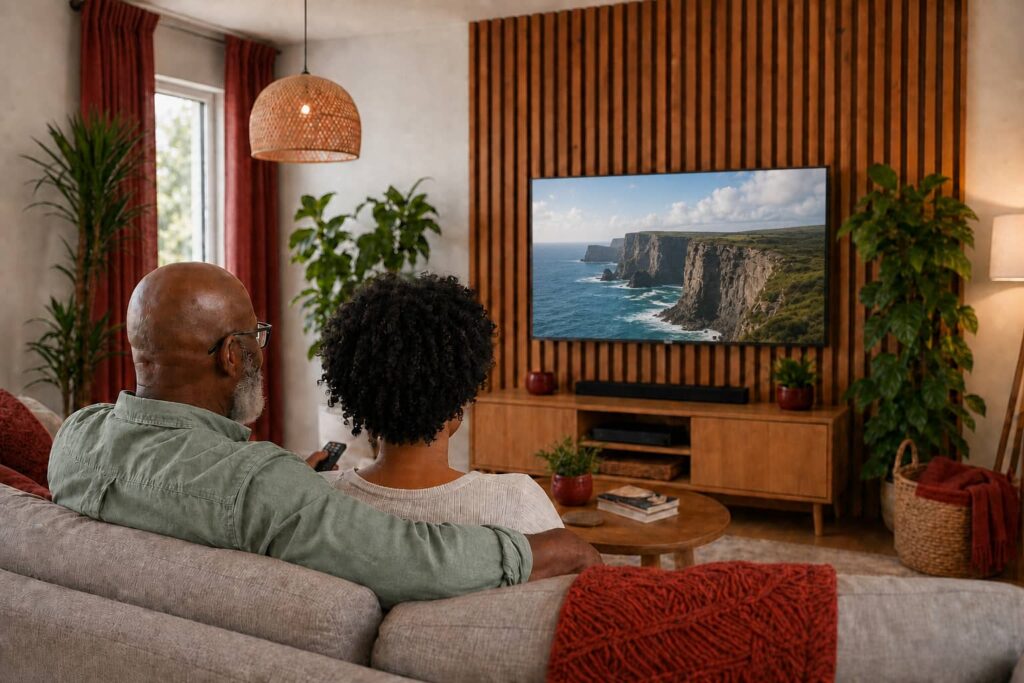
In residential spaces, AI could help create entertainment environments that respond to individual preferences automatically. Multi-room audio, cinema rooms, media walls, lighting scenes and acoustic settings could all become more intelligent over time.
Rather than asking users to choose from a long list of options, systems may begin to recognise patterns.
A room could prepare itself for a film night. A kitchen display could prioritise useful information in the morning. Audio could follow people through the home more naturally. Video conferencing spaces could optimise lighting, framing, and sound without manual adjustment.
The technology becomes less visible, but more valuable.
The opportunity for residential technology professionals
For integrators, consultants and residential technology specialists, AI creates a clear opportunity – clients will need guidance, not just products.
They will need systems that are designed properly from the outset. They will need networks that can support growing device ecosystems. They will need AV environments that are intuitive, reliable and tailored to how people actually live.
They will also need help understanding the trade-offs.
AI introduces important questions around privacy, cybersecurity, data collection, and control. In private homes, those questions matter deeply. A system that feels intelligent can quickly feel intrusive if it is not designed with trust in mind.
Residential technology professionals will therefore have an important role to play in making AI useful, secure and proportionate.
A connected home can be controlled. A responsive home can understand context.
Intelligent homes need intelligent foundations
The next phase of connected living will not be about adding more technology for the sake of it.
It will be about creating homes that feel calmer, simpler and more responsive.
AI may change what homeowners expect from lighting, climate, security, entertainment and energy management. But those experiences will still depend on the fundamentals: strong networks, well-designed AV systems, careful integration and professional installation.
The smart home is no longer just becoming connected.
It is becoming responsive.
And for the residential sector, that could reshape how technology is designed, delivered and experienced…
Planning a smarter residential project?
From robust Wi-Fi and network design to integrated AV systems, airwave connect helps create connected homes:
connect@airwaveconnect.co.uk or +44 (0)1403 783 483