
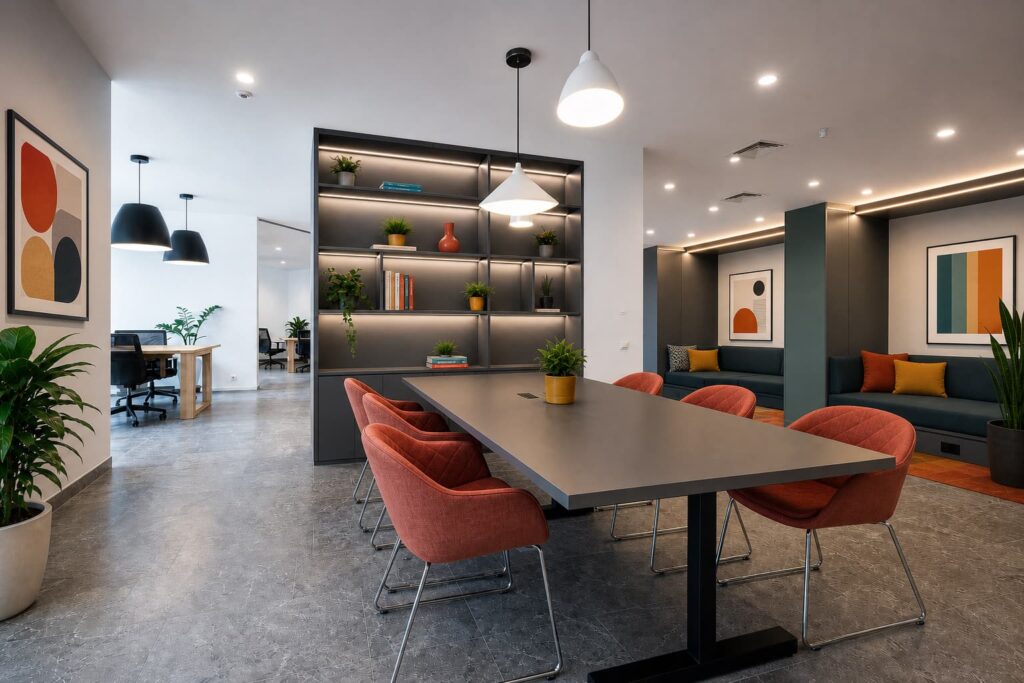
Fast, Flexible, Friction-Free: the coworking space blueprint
Coworking spaces are built on a simple promise: work should feel easy.
Digital nomads arrive expecting to open a laptop, join a video call, download files, present to a screen, take a private call, and move between spaces without thinking about the technology behind it. That expectation is now part of the product.
The problem is that coworking environments place unusual pressure on technology. They are busy, shared, changeable spaces used by different people, businesses, and devices throughout the day. A system that’s on cruise control at 9am can get stuck in traffic when all the desks are full, every meeting room is booked, and half the building is on a video call.
This is why the best coworking spaces need to be fast, flexible and friction-free.
Poor connectivity is not just a technical inconvenience. It's commercial problem.
Fast is the baseline
In coworking, fast connectivity is a minimum standard.
Members are using cloud platforms, video meetings, shared documents, design files, project tools, payment systems, messaging apps and multiple personal devices. Some are writing emails at a desk. Others are presenting to clients, uploading large files, or running a workshop from a meeting room.
The network has to support all of that without an issue.
A 2025 coworking connectivity survey found that 11% of operators had either lost a client or failed to win a new one because of IT issues. That is a sharp reminder that poor connectivity is not just a technical inconvenience. It’s a commercial problem.
Fast Wi-Fi is not only about speed tests. It is about capacity, coverage and consistency. Can the network cope when the space is full? Can it support video calls in meeting rooms and booths? Can guests connect easily without compromising member or staff systems? Can operators provide a reliable service without front-of-house teams becoming part-time IT support?
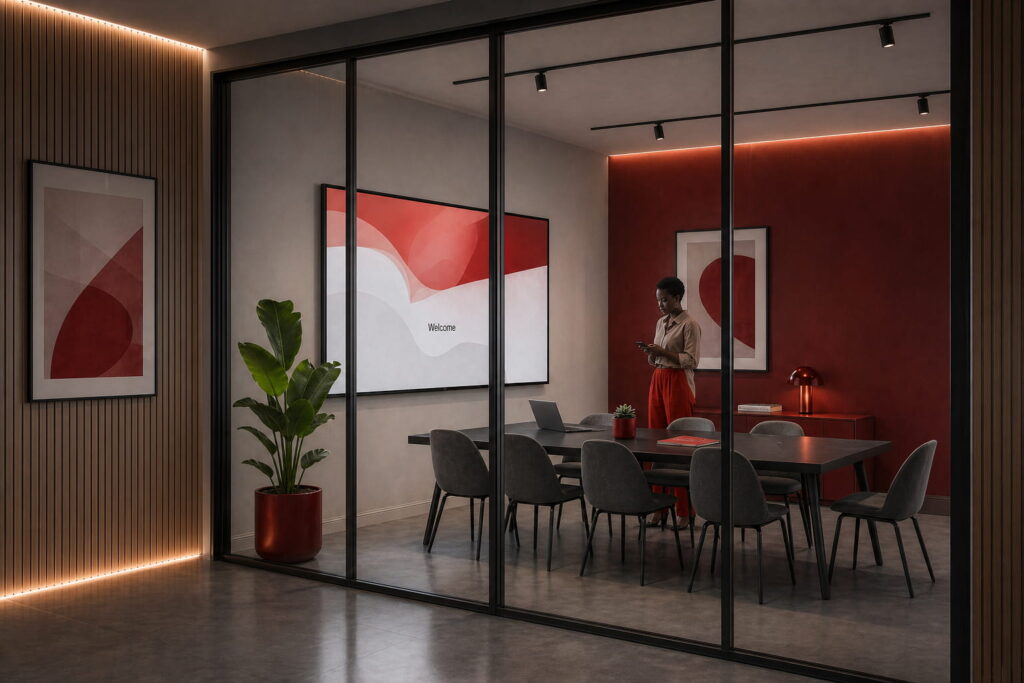
Flexible spaces need flexible systems
And of course, coworking spaces rarely have one fixed use.
A lounge may be quiet in the morning, informal at lunchtime, and used for an event later in the day. Meeting rooms may switch between sales calls, interviews, training sessions and board meetings. Phone booths, breakout areas and shared desks all need to support different working patterns.
The technology has to keep up.
Cushman & Wakefield’s Global Flexible Office Trends 2025 report found that 55% of global occupiers now use flexible office solutions, with 17% planning to increase their use. It also reported rising meeting-room bookings across all major regions, including a 17.4% increase in EMEA.
That matters because it shows where flexible workspace is heading. It is not just about desks. It is about collaboration, meetings, hybrid work and spaces that can shift purpose throughout the day.
For operators, this means infrastructure has to be planned properly. Digital signage should be easy to update. Room booking should reduce confusion. Audio should be zoned by area. Meeting-room AV should support different users and devices. Networks should be scalable as occupancy, services and sites grow.
Flexibility is only useful if the technology behind it can flex as well.
Friction-free means fewer small failures
Most coworking technology problems are not dramatic. They are small, repeated moments of friction.
The screen will not connect. The audio echoes. The Wi-Fi drops in one corner. A member cannot find the right room. The booking panel is out of sync. The background music is too loud in one area and too quiet in another. None of these problems feels catastrophic on its own.
But they dilute the experience.
Meeting-room technology is a good example. Research reported by ITPro in 2026 found that 74% of UK employees were experiencing difficulties in hybrid meetings, while 79% said they lost time to technical problems. The same report said meeting setup wasted an average of six and a half minutes per meeting.
That is exactly the kind of friction coworking spaces need to remove.
A meeting room should not begin with a troubleshooting exercise. Members should not have to hunt for cables, guess which input to use or apologise to clients while the camera refuses to cooperate. The room should be simple enough for different people to use without staff intervention.
The same principle applies across the whole environment. Good technology should reduce the number of little interruptions that make a space feel harder to use than it should.
Many network, signage and AV issues can be identified, diagnosed, and resolved without an engineer attending site.
Support should not fall on the front desk
Coworking teams are there to run the space, support members and create a pleasant working environment. They should not have to manage Wi-Fi issues and AV peculiarities.
Remote monitoring and support can make a real difference. Many network, signage and AV issues can be identified, diagnosed and resolved without an engineer attending site. For multi-site operators, central management also helps keep settings, content and support consistent across different locations.
That gives operators more control and gives members a smoother experience.
It also protects the team. A Coworks article on coworking complaints noted that tech issues were the second most common issue for managers, who would rather spend time with members than acting as IT support.
That is the point. Technology should reduce workload, not create another queue at reception.
The outcome: a space people trust
Coworking is judged through daily use.
Members may not notice a well-designed network, a reliable display system, or a professionally configured meeting room. They simply get on with their day. That is the mark of good infrastructure.
But, they notice when it fails.
Fast, flexible and friction-free technology helps coworking spaces protect the quality of that everyday experience. It supports productivity, reduces complaints, helps teams manage shared spaces and gives operators infrastructure that can grow with the business.
The best coworking technology does not need to show off. It needs to work, adapt and stay out of the way.
In a shared workspace, technology is rarely the reason people join. But if it gets in the way often enough, it can become the reason they leave…
Source notes: Cushman & Wakefield reported that 55% of global occupiers use flexible office solutions, 17% plan to increase use, and EMEA meeting-room bookings rose 17.4%. A technologywithin coworking connectivity survey found 11% of operators had lost or failed to win a client because of IT issues. ITPro reported Owl Labs findings on hybrid-meeting technology problems among UK employees.
Get in touch
The fit-out gets people through the door. The technology keeps them. Let's make sure yours holds up. Talk to the airwave connect team about the network, AV and signage behind your space.
connect@airwaveconnect.co.uk or +44 (0)1403 783 483